
Owings Mills City Directory Runs
No single continuous Owings Mills directory series exists. The useful shelf is scattered across Baltimore County, Baltimore Suburban, telephone, and reverse-directory volumes instead. That matters for any resident lookup. A rural-era person may sit under a county or village heading. Later households often use a postal or suburban label. Treat the collection name as part of the street directory search, never as proof that an entry sits inside today's CDP boundary.
| Collection | Years | Where held | Access |
|---|---|---|---|
| Baltimore County directories | Exact complete run not published | Historical Society of Baltimore County | Noncirculating; ask staff for Owings Mills, Reisterstown, Pikesville, or county call numbers |
| Baltimore Suburban Directory | 1955, 1959, 1963 located | Maryland State Archives, University of Maryland, selected libraries | Catalog or on-site reference |
| Baltimore County Farmer’s Directory | 1915 | Genealogical-society list and research libraries | Search by surname, farm or tract, and road |
| Baltimore County criss-cross | 2000 edition located | Reference collections and WorldCat-listed libraries | Address-first lookup; other years need confirmation |
| Telephone and white-page volumes | 1970/71 Baltimore-area microfilm located | LOC, Pratt, BCPL, and UMD research routes | Inspect locality segment and listing status |
The listed years are checkpoints. They do not promise annual coverage. The Historical Society describes its Baltimore City and County directory holdings as limited, and neither the BCPL page nor the official sources publish a complete Owings Mills shelf list. Ask the reference desk when a wanted year is missing. A librarian request is the reliable fallback for a gap. For regional microfilm and microfiche locations, the Maryland State Archives directory holdings list works as a strong first finding aid.
Use the institutional listings to track down a volume. Then confirm the edition and locality label before counting it as an Owings Mills city directory source.
Owings Mills Directory Era Shifts
The 1915 Farmer's Directory captures a rural moment. Later, Baltimore Suburban volumes from 1955, 1959, and 1963 trace a growing county. Telephone material adds a regional layer by 1970/71, and the 2000 Stewart Directories criss-cross edition supplies an address-first checkpoint. Vocabulary changed as much as format.
| 1915 | Baltimore County Farmer’s Directory, useful for farms, tracts, roads, and rural names. |
|---|---|
| 1955, 1959, 1963 | Baltimore Suburban volumes, a bridge into postwar suburban directory research. |
| 1970/71 | Baltimore-area telephone microfilm, with the exact Owings Mills segment requiring inspection. |
| 2000 | Baltimore County criss-cross directory by Stewart Directories, Inc., listed as an address-to-occupant, business, or telephone source. |
An old farm, tract, hundred, or Reisterstown-area label can precede an Owings Mills postal label. That label is the key. Growth reshaped the map. A later subdivision, condominium, or commercial parcel may sit on land an older source describes very differently. So write it all down. Record the road, tract, spouse, and locality label together. Only then decide whether an entry belongs to the same person.
Note: A directory label, telephone exchange, Census geography, and postal city can cover the same ground with different boundaries.
Owings Mills Directory Shelves
The BCPL Owings Mills branch puts a librarian close by. It also offers public computers and in-branch Ancestry Library Edition. Its branch page lists no Maryland Room. No complete directory inventory appears there either. So ask for a narrow reference or interlibrary search. Build it on a surname, road, year, or title. HeritageQuest and newspaper access may come through a library card or an in-branch session. That depends on the current license.
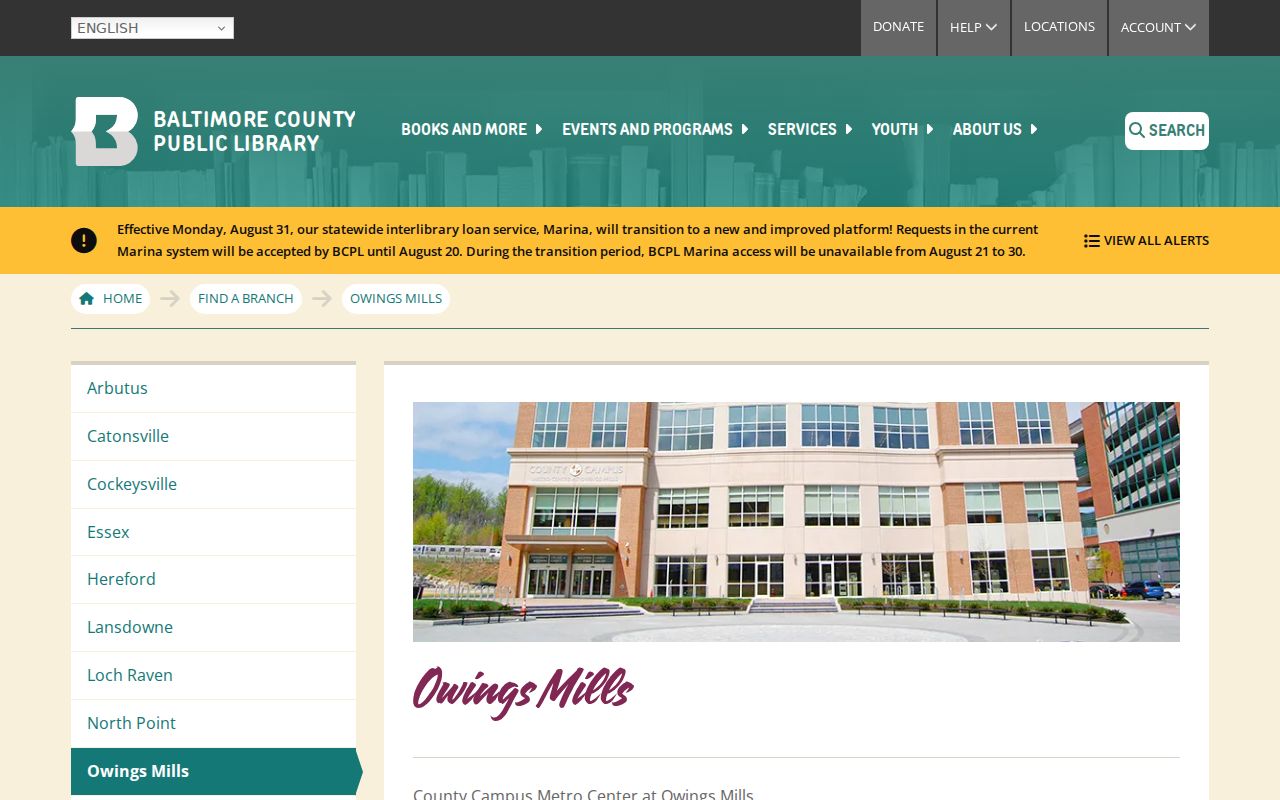
The branch is a starting point for finding which edition is nearby, on microfilm, licensed online, or held by another institution.
The Historical Society of Baltimore County library goes deeper. Its noncirculating collection tops 4,300 volumes, adding maps, cemetery files, photographs, surname files, vertical folders, and limited directories. Public hours are Friday and Saturday, 10 a.m. to 2 p.m., or by appointment. A nonmember visit is $10. Research requests are billed hourly. Members pay $15 an hour and nonmembers pay $25.
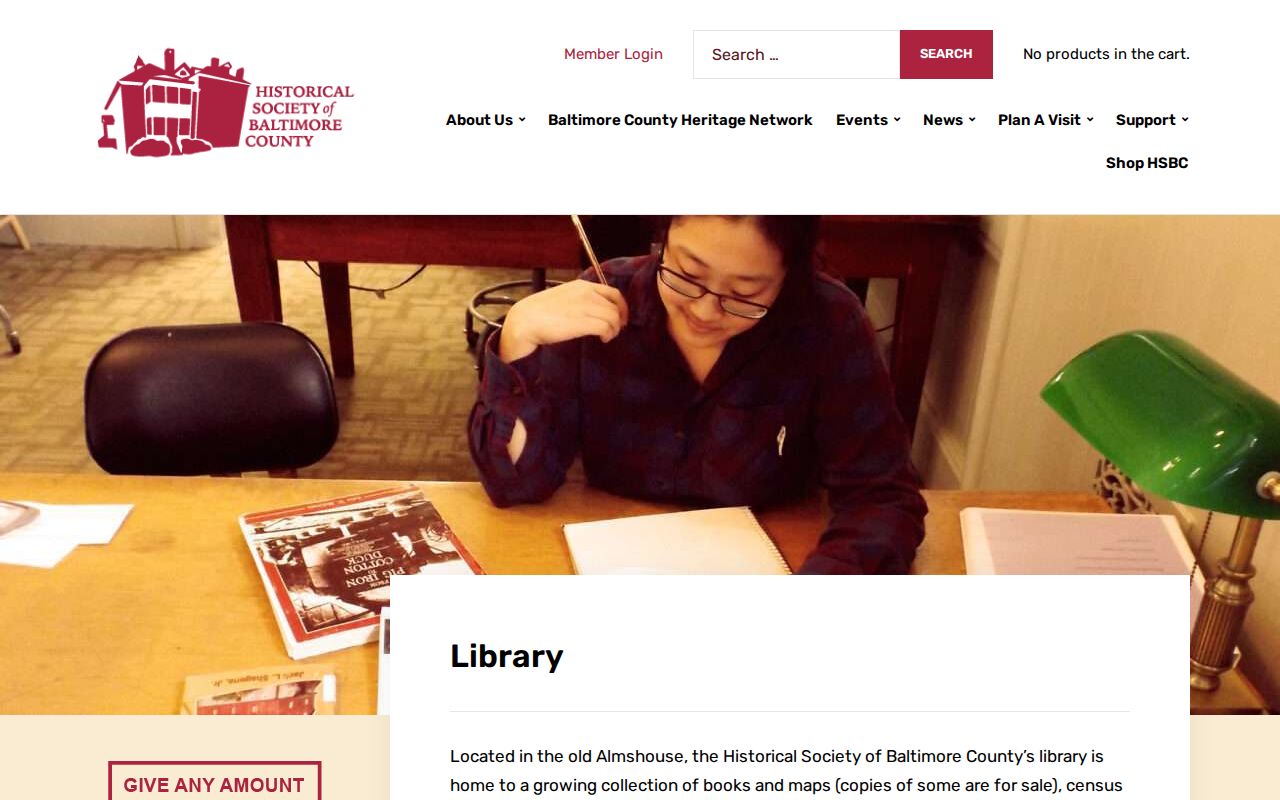
Sometimes a directory lists only a road or tract. The society's maps, clippings, cemetery material, and vertical files supply the missing post-office and neighborhood context.
Owings Mills Directory Entry Fields
No open collection publishes a live sample of an Owings Mills entry. Treat the field list as a checklist. It applies to Baltimore County, Baltimore Suburban, telephone, and criss-cross volumes, not a claim that every edition prints every field. Copy the abbreviation key first, before assigning a meaning to a mark.
| Name line | Surname, given name or initial, and sometimes a spouse in parentheses. |
|---|---|
| Street line | Street number and road, rural route, village, or post-office label. An abbreviation may change how it reads. |
| Occupation or business line | Historical context when supplied, not proof of a present-day role. |
| Occupancy or widow notation | Possible in commercial directories, but confirm the mark in that edition’s own key. |
| Telephone or reverse line | A telephone volume may add an exchange; a criss-cross volume begins with address, then occupant, business, or phone. |
- Criss-cross directory
- An address-first directory that can lead from a street number to a listed occupant, business, or telephone entry for that edition.
- Householder index
- A name arrangement intended to identify the household line, rather than every person connected with an address.
- Abbreviation key
- The volume’s explanation of shortened street, relationship, or listing marks. Its meaning can change from one publisher or year to another.
An absence has many explanations. The household may have been unlisted, seasonal, filed under initials, or described by a rural address. A blank line never proves absence from the area.
Owings Mills Criss-Cross Clues
A criss-cross directory flips the usual order. You begin with a house number and street name. Inspect the publisher's key, then read the address-first entry as a dated lead. The 2000 Baltimore County criss-cross is a confirmed checkpoint. Official BCPL sources publish no earlier local editions, so ask BCPL or Pratt reference staff whether preceding volumes can be requested.
For a current parcel or a whole named street, reach for address-records tools instead. An old directory cannot do current work. The Owings Mills street directory follows the modern parcel, deed, and GIS chain. A historical reverse entry still earns its keep. It can supply a road spelling, a listed phone, or an address that bridges later research.
Owings Mills Directory Companions
A directory entry works best as a starting point, not an ending. Pair it with the local sources. Those fill in what a Owings Mills volume omits. The Baltimore County Public Library offers newspaper research routes, including the Baltimore Sun. The Historical Society of Baltimore County holds clippings. It also keeps cemetery inscriptions, surname material, maps, and vertical files. One obituary can name a spouse. A marriage notice or land-sale item can supply a road or tract name. Those details point to the next directory edition. Until an original record confirms the address or relationship, the entry stays a lead.
Search more than one locality label alongside Owings Mills. Entries from different eras sit under different labels. They may be filed under Baltimore County, Garrison, Reisterstown, a rural route, or a nearby post office. A narrow question to BCPL or HSBC works better than a broad one. Give a surname, an approximate year, a road, a subdivision, or a newspaper title. That specific request is far more likely to land on the right shelf or microfilm run. It outperforms a plea for every record about a family.
Tracing Owings Mills City Directories
Start family research from a date anchor, not a bare surname. A census page or obituary can give you a likely year. A cemetery file or newspaper notice can help with the spelling. Then open the alphabetical portion of the directory. Copy down the full address and any spouse or child detail it lists. A reverse volume may exist. If so, test that same address there to see who else shared it. Finally, pair the directory snapshot with the closest federal census year. That gives a fuller picture of the household.
- Start with the earliest likely directory year and record the full printed name, locality label, road, and all abbreviations.
- Check later volumes at five- or ten-year intervals, noting a changed spouse name, road, route, tract, or postal label.
- Use the reverse or criss-cross section for the recorded address when that edition has one.
- Compare 1900, 1910, 1920, 1930, 1940, or 1950 census information with the nearest directory checkpoint, preserving ages and household relationships.
- Use BCPL newspaper access, HSBC clipping files, cemetery files, or an obituary as leads, then confirm a property transition in the deed and GIS record.
A name that vanishes from one volume has not left the record. The person may have moved, died, gone unlisted, or changed the form of the name. Try the spouse and the middle initial. Try the old road spelling, the tract or subdivision, and neighboring postal labels such as Garrison. Only then end the trail.
Owings Mills City Directory Limits
Treat a city directory as a periodic snapshot, never a legal residence certificate. It cannot show every person present at an address. It does not prove ownership, a modern mailing address, or a continuous household timeline. A Baltimore City entry may hint at a regional family or business tie. But it proves nothing about residence in Baltimore County. Use it as a pointer, then verify elsewhere.
Owings Mills is unincorporated. No municipal clerk archive stands in for the county and state repositories. When a source runs thin, widen the locality terms to Baltimore County, Garrison, Reisterstown, a rural route, a road, or a tract name. Keep the original citation and page image with every finding. That habit preserves the line between a valuable directory lead. And a record that confirms it.