
Owings Mills Previous Residents by Era
Owings Mills has no town hall records office. The place is unincorporated. So the paper trail runs through Baltimore County and Maryland repositories instead. Begin with the parcel's current assessment record. Note the deed reference it carries. Following the land chain can lead into older county books, where the familiar house number gives way to a tract, subdivision, lot, block, or even a named neighbor as the identifier. For the people tied to the property in a given year, pull a dated directory or census record and read it as its own layer of evidence.
| Historical source | Years located | Where to use it | What it contributes |
|---|---|---|---|
| Baltimore County early land index | 1655–1851; land books from 1659 | MDLandRec and Maryland State Archives historical indices | Early grantor/grantee and tract history |
| Circuit land index and originals | 1851–1921, 1851–1992, 1922–1970; originals through 2005 catalogued | MDLandRec, Archives, and Circuit Court Clerk | Parties, book/page, instrument type, and recording trail |
| Baltimore County Farmer’s Directory | 1915 | Genealogical and research libraries | Rural names, farms, tracts, and locality clues |
| Baltimore Suburban directories | 1955, 1959, and 1963 located | Maryland State Archives, UMD, and reference libraries | Suburban household and address snapshots |
| Baltimore County criss-cross | 2000 edition located | Reference collections and catalog-guided library search | Address-to-occupant, business, or telephone snapshot |
| Federal census | 1790–1950 public | NARA and library genealogy resources | Names, relationships, ages, and historical geography |
| County permit GIS | 1995–present described for the pre-2022 layer | Baltimore County GIS and permit records | Application, issue, occupancy, and property-change dates |
A recent transfer points you to the newest property record first. Older properties call for a different start. Reach for directories, maps, and census material whenever the land predates present-day subdivision names. The era table lays out routes, not promises. Match the route to the era. Coverage has gaps. Owings Mills never received its own Sanborn run, so Baltimore City fire sheets are no evidence for this address.
Note: Record the exact edition and year of every directory or census result, since these sources capture different dates and different geography.
Owings Mills Previous Residents Start at SDAT
SDAT is the bridge to an address history. Start at Baltimore County. The public form searches by address, street name, account identifier, or map reference. Owner-name and ZIP searching are not offered. A returned card can show the assessed owner, mailing address, premises address, account, deed liber and folio, legal description, map, grid, and parcel, plus assessments and selected sales or structure fields. Copy the premises and legal fields before changing screens.
The mailing address is not a residence finding. It may name an estate, a trust, an agent, or an out-of-area tax recipient. The premises address is where the parcel sits. The legal description lasts longer, keeping its value when a former Owings Mills address carried a tract name, a rural route, or an earlier subdivision label. A deleted or renumbered record adds a wrinkle. SDAT routes those lookups to the account identifier rather than assuming a street search will find the parcel.
Maryland SDAT Real Property Data Search opens the current parcel entry point. Its official search instructions cover the permitted search modes and the street-name wildcard option.
Owings Mills Deeds Reach Back to 1659
Baltimore County's record depth deserves respect. Surviving county land books start in 1659, and early court land records and indexes reach to 1655/1659. That depth is a warning. A single current name form will mislead you. The Archives catalogs later series in electronic or original form, spanning 1851–1921, 1851–1992, 1922–1970, and original-paper records through 2005. Each series covers different ground. There is no single online beginning date, and the Maryland State Archives deeds guide explains the historical land-record route along with the newer Historical Indices terminology.
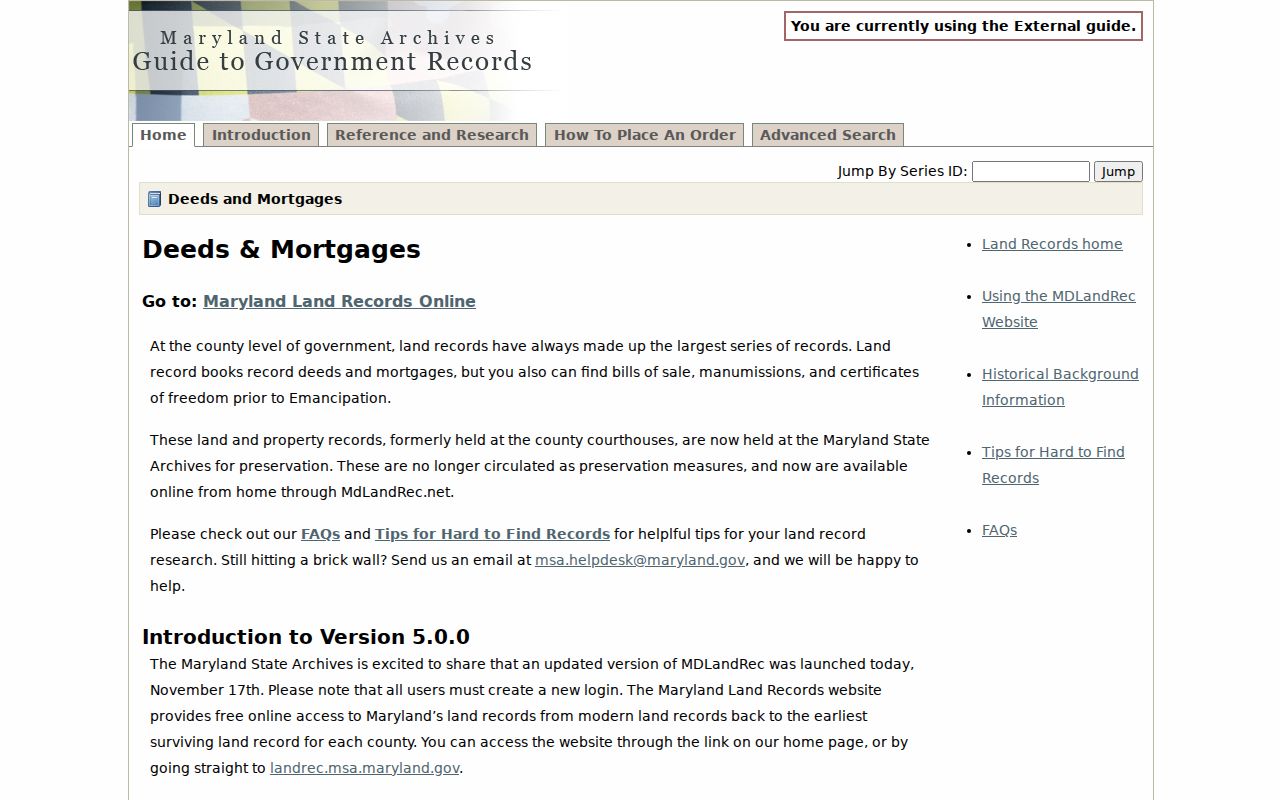
The deeds guide shines once the address disappears. Old records rename things. A tract name, an old road spelling, a legal description, or a predecessor subdivision becomes the search key. Owings Mills itself changed character. It grew from rural land into a planned suburb of Baltimore County. Searching only the modern place name misses records filed under Baltimore County, the Reisterstown district, Garrison, a farm or tract name, or an older post-office label. Keep each original label exactly as written.
Tracing Owings Mills Previous Residents Through Deeds
MDLandRec is the core tool for a deed chain. Choose Baltimore County. Enter the current grantee or the exact book and page from SDAT to pull the current instrument. Read the image closely. Note the seller, legal description, date, consideration, prior-deed reference, tenancy language, and any recorded mailing information. Then search that seller as a grantee in the earlier period, and repeat; the series that emerges tracks recorded property interests, not a complete list of past residents.
- Use the current SDAT parcel card to record the owner, account, legal description, and liber/folio.
- In MDLandRec, select Baltimore County and retrieve that deed by name or book/page. Create the required account to open free online images.
- Read the deed image and note the grantor, who transferred the interest, and any prior-deed citation.
- Search that grantor as a grantee to identify the earlier acquisition, then repeat while the parcel and legal description remain consistent.
- When a current street address ends, continue with the tract, lot/block, subdivision, grantor/grantee, or historical-index route. Use the Clerk or Archives for the relevant older volume or copy.
- Grantor and grantee
- The grantor transfers an interest; the grantee receives it. A party can appear in different roles on different deeds.
- Chain of title
- The chronological sequence of recorded transfers affecting the same property interest.
- Legal description
- The deed’s lot, block, subdivision, tract, or other legal wording. It often outlasts a street-number change.
- Liber and folio
- Maryland’s book and page reference for a recorded instrument. It is the bridge from the parcel card to the deed image.
Owings Mills Historical Indices When Typing Ends
MDLandRec's user guide shows Name or Search for a Book/Page. Fields cover last, first, and middle name, suffix, legal capacity, ownership, party type, document type, remarks, reference book/page, date range, and sorting. The redesign adds text modifiers. Begins With, Ends With, Contains, Fuzzy, and Soundex are on offer. They tame initials and spelling variants. No modifier makes every historical index searchable as typed text, though. Older Baltimore County material sits under County, then Indices and Historical Indices. These are browsable scans. Find the alphabetic surname page first. Note the book and page, then use Jump to New Volume/Page to retrieve the deed. The patent tract index, series S1582, helps here. It carries 10,767 entries spanning 1658 through 1965. It rescues searches where the record is a tract rather than an address. The MDLandRec county and book/page search is where this chain begins.
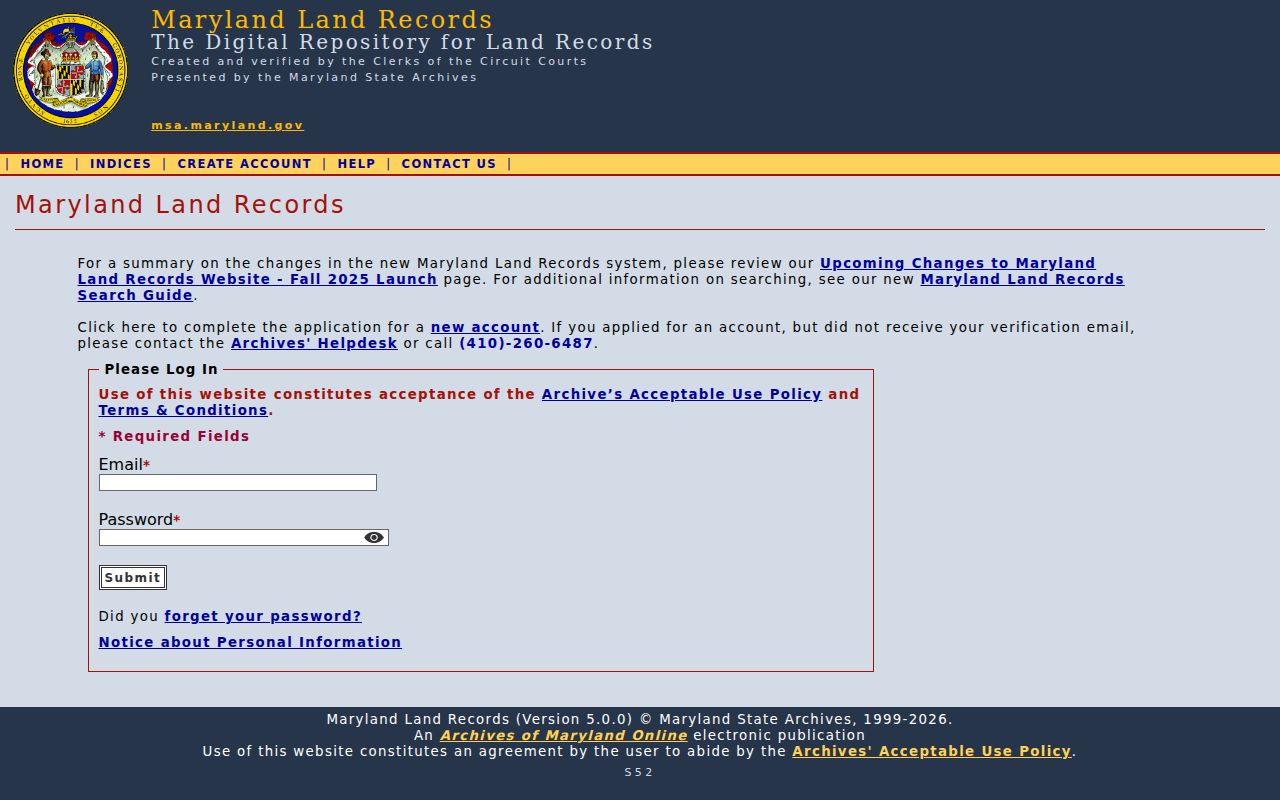
Early land records sit in separate Baltimore County series. That is why the county selector and the book/page route both matter in the Owings Mills residents directory workflow. Pick the wrong series and the entry stays hidden. When a deed surfaces, do more than copy a screen result. Record the book, the folio, the parties, the date, and the source URL. That way the Owings Mills residents directory trail can be retraced later.
Note: Online deed images are free after account access. Certified copies use a separate order route, and courthouse copies are generally $0.50 per page.
Owings Mills Past Residents in Directory Years
A deed proves a recorded property interest, nothing more. Directory and census records fill the gap. They name the people tied to an address in a given year. For rural Owings Mills, the 1915 Baltimore County Farmer's Directory is a useful checkpoint. Baltimore Suburban volumes exist for 1955, 1959, and 1963. A 1970/71 Baltimore telephone collection and a 2000 Baltimore County criss-cross edition add later snapshots of past residents. The decades between editions are simply blank, so a missing entry never proves a household was absent.
Match each directory year to the closest federal census year. Keep the original spelling, initials, spouse or relative, age pattern, road, local label, and the abbreviation key exactly as printed. A criss-cross directory flips the usual order. It starts with the address. Then it lists an occupant, business, or phone detail. That makes it a natural street directory for tracing neighbors. Check the edition and its local coverage before trusting the reverse section.
Collection-level details sit in the Owings Mills Directory Book. For access, ask BCPL for a reference search. Visit the Owings Mills branch for in-branch Ancestry Library Edition and its databases. Or use the Enoch Pratt Free Library for wider city and county directory and newspaper holdings. The Historical Society of Baltimore County keeps limited directories, maps, vertical files, cemetery material, and research help. Nothing circulates.
Note: A directory entry is a dated snapshot. Compare it with the closest census and property record before drawing a household conclusion.
Owings Mills Previous Residents and Property Changes
Permits can date a property change even when they name no one. The county's permit map searches by address or permit number. It plots nearby results by trade or category. Its pre-2022 layer covers records from 1995 forward. Details may include application, issue, and occupancy dates. Owner and site addresses, work description, use, parcel references, subdivision, and permit type also appear.
Citizen Access tends to show only submissions tied to the logged-in creator. Start with the public map. Older or fuller copies come from the county on request. The Building Inspections copy route is at 111 W. Chesapeake Avenue, Room G-24, Towson, 410-887-3953. Residential copies run $20 per address, unit, or trade. Judge a permit against deed dates, not a guessed move date.
Owings Mills Estates and Previous Residents
A property trail sometimes ends at an estate. Treat that as a family-history cue, never as proof that a shared surname means kinship. The Baltimore County Register of Wills offers Estate Search fields for name, county, date, estate number, type, and status. The office holds estate administration, wills, inventories, accounts, guardianship, and related filings. Names inside an estate file can test a final deed link against recorded dates and the legal description.
The Baltimore County Register of Wills sits in Room 500, reachable at 410-887-6680 on weekdays from 8:30 a.m. to 4:30 p.m. Its Records Division is 410-887-6688. Copy requests go online or by phone, and filings never arrive by email. Baltimore County estate series also live at the Archives. Obituaries, cemetery files, BCPL newspapers, and HSBC clippings offer dated leads, but a vital or estate record is the proper confirmation.
Lawful use. Owings Mills previous-resident research is appropriate for house history, family history, estate matters, and personal curiosity. Do not use a discovered record to stalk, harass, or harm a living person.